Choose the appropriate grade level first. The available simulations will then appear.
Choose grade level
This selection determines which simulations and subject-specific approaches are shown in the main menu.
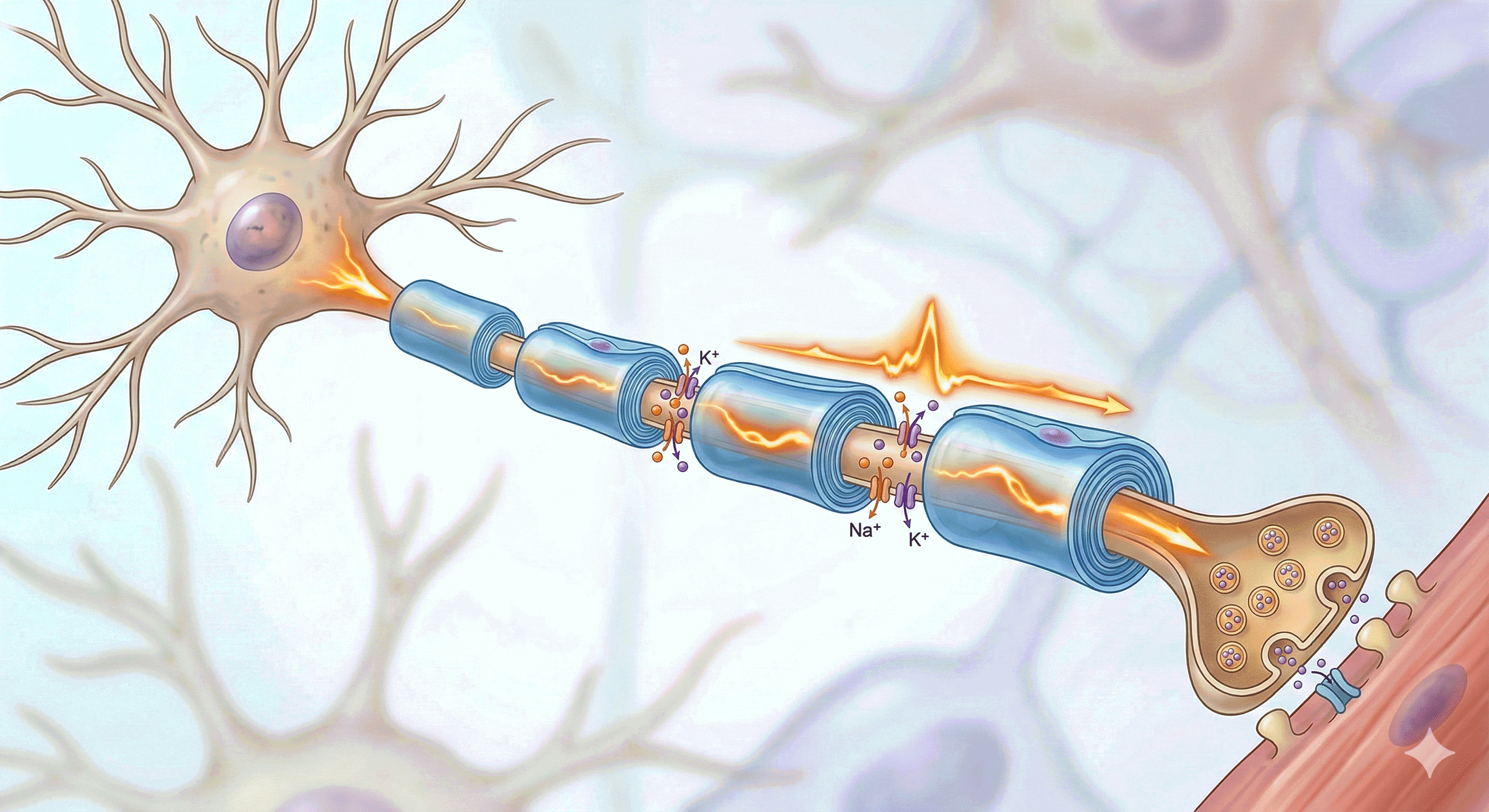
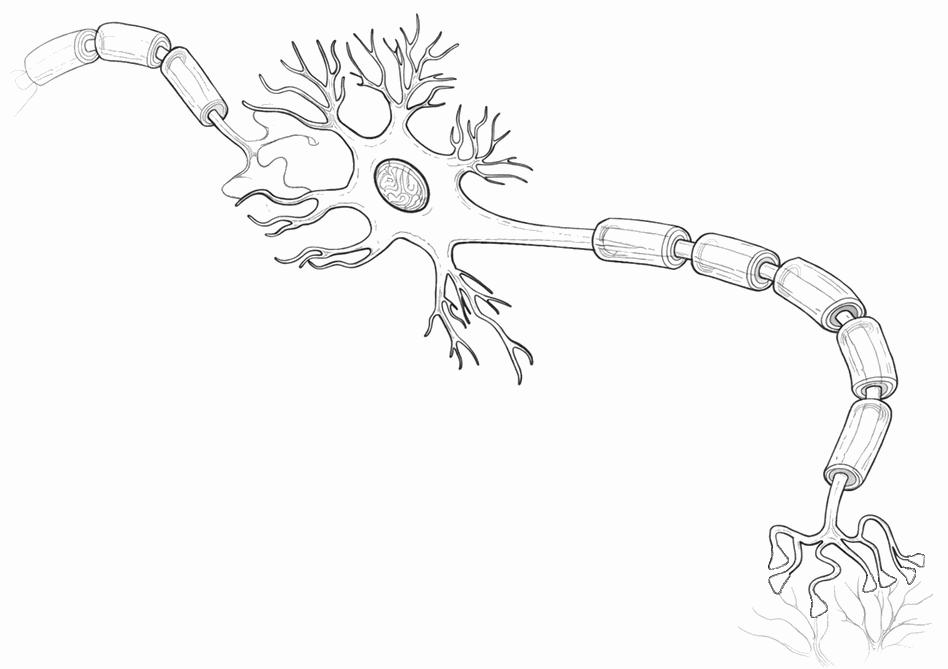
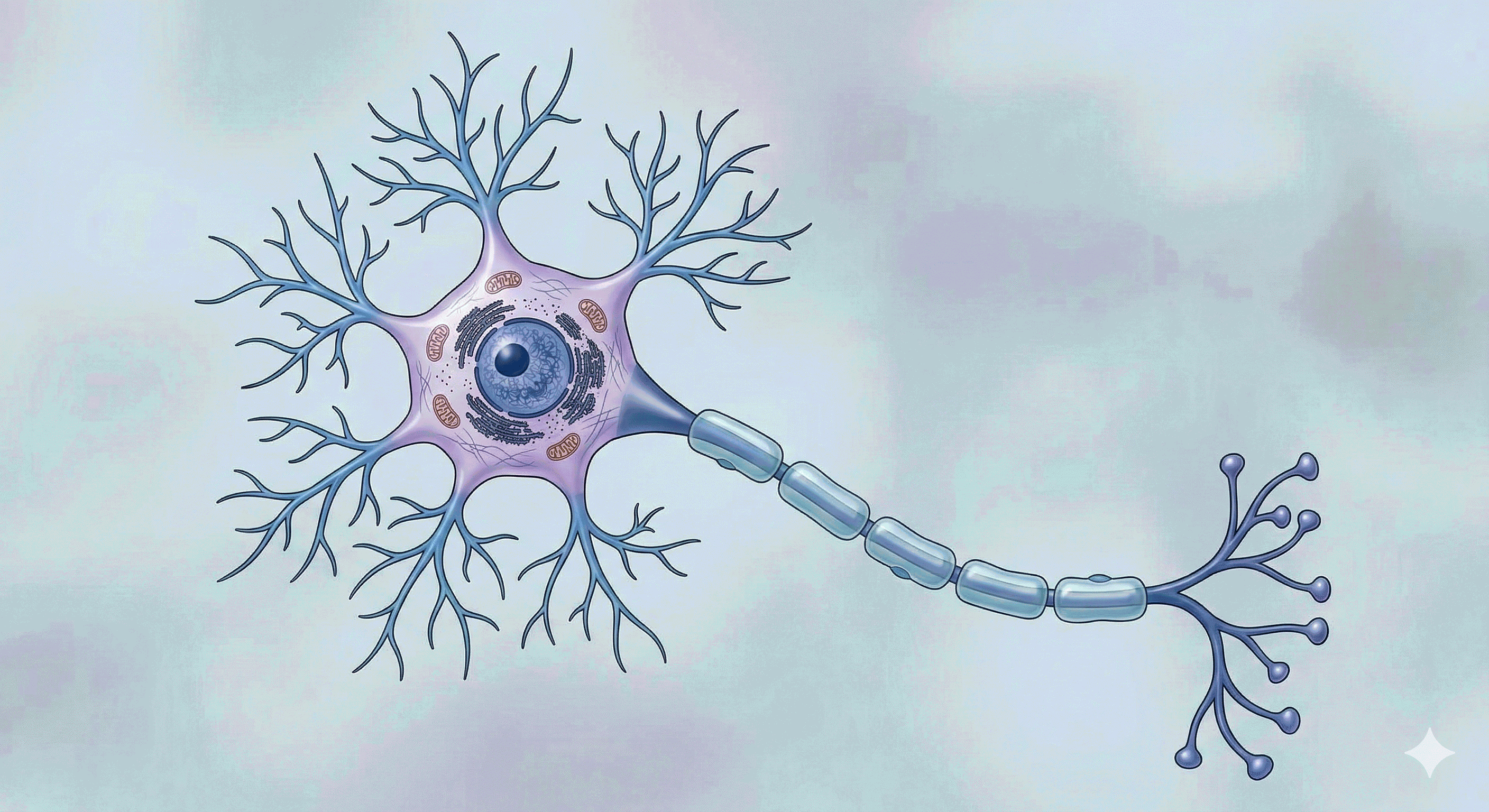
The neuron
Explore the structure of a neuron and assign key structures their roles in receiving, transmitting, and passing on information.
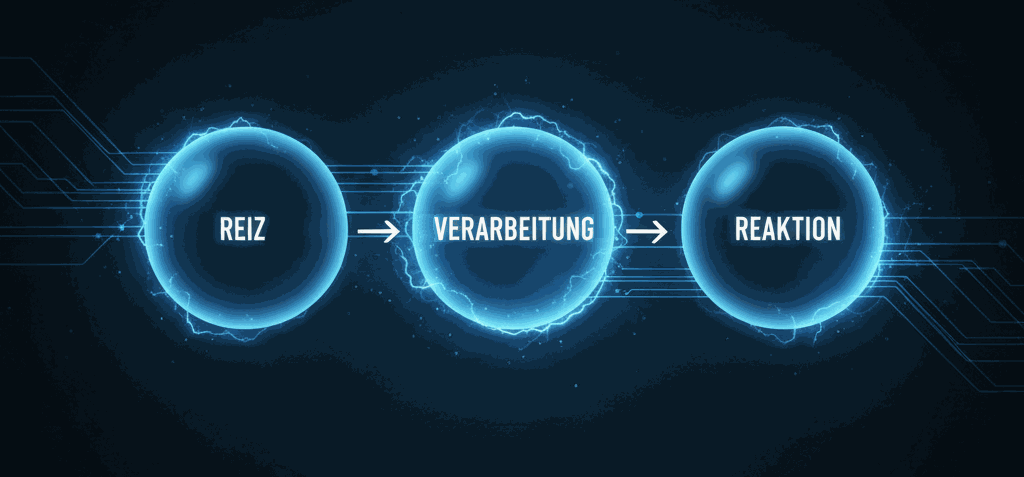
Stimulus-response chain
Build everyday stimulus-response chains and explain how a stimulus leads to a conscious response via sense organ, brain, and effector.
Resting potential
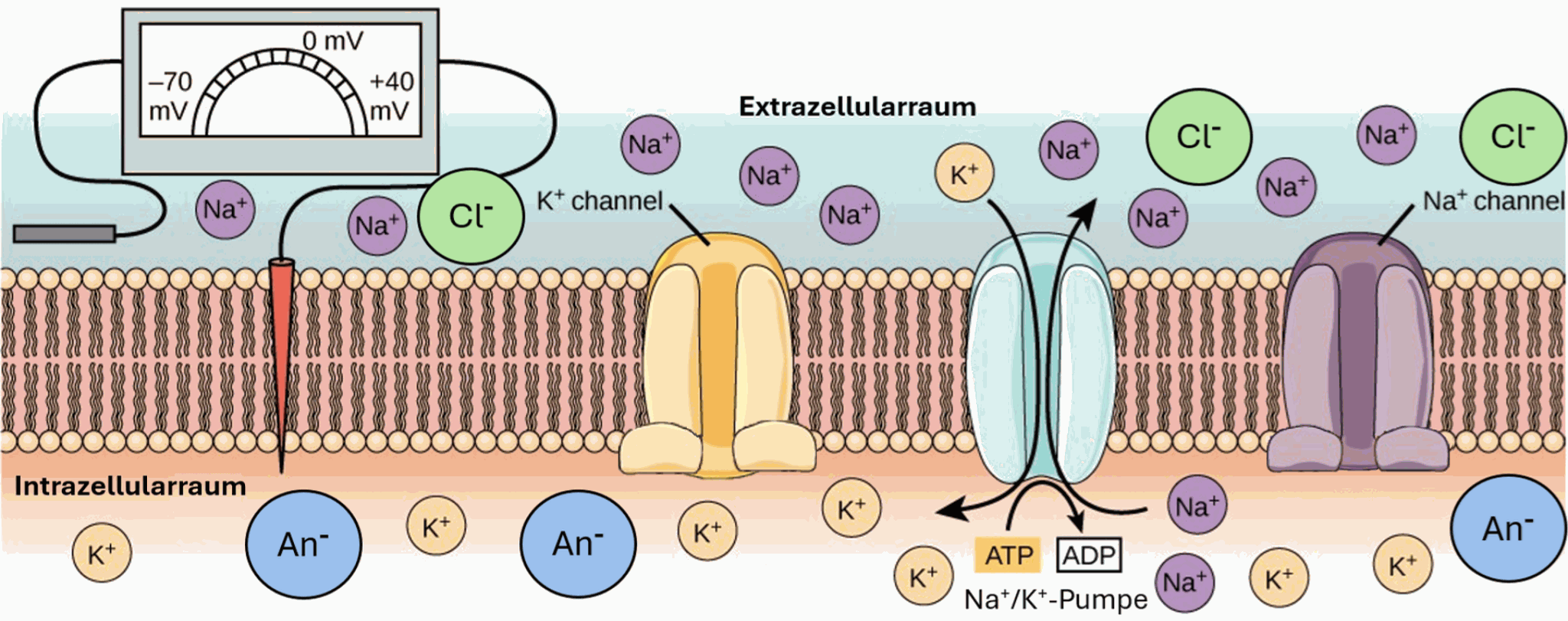
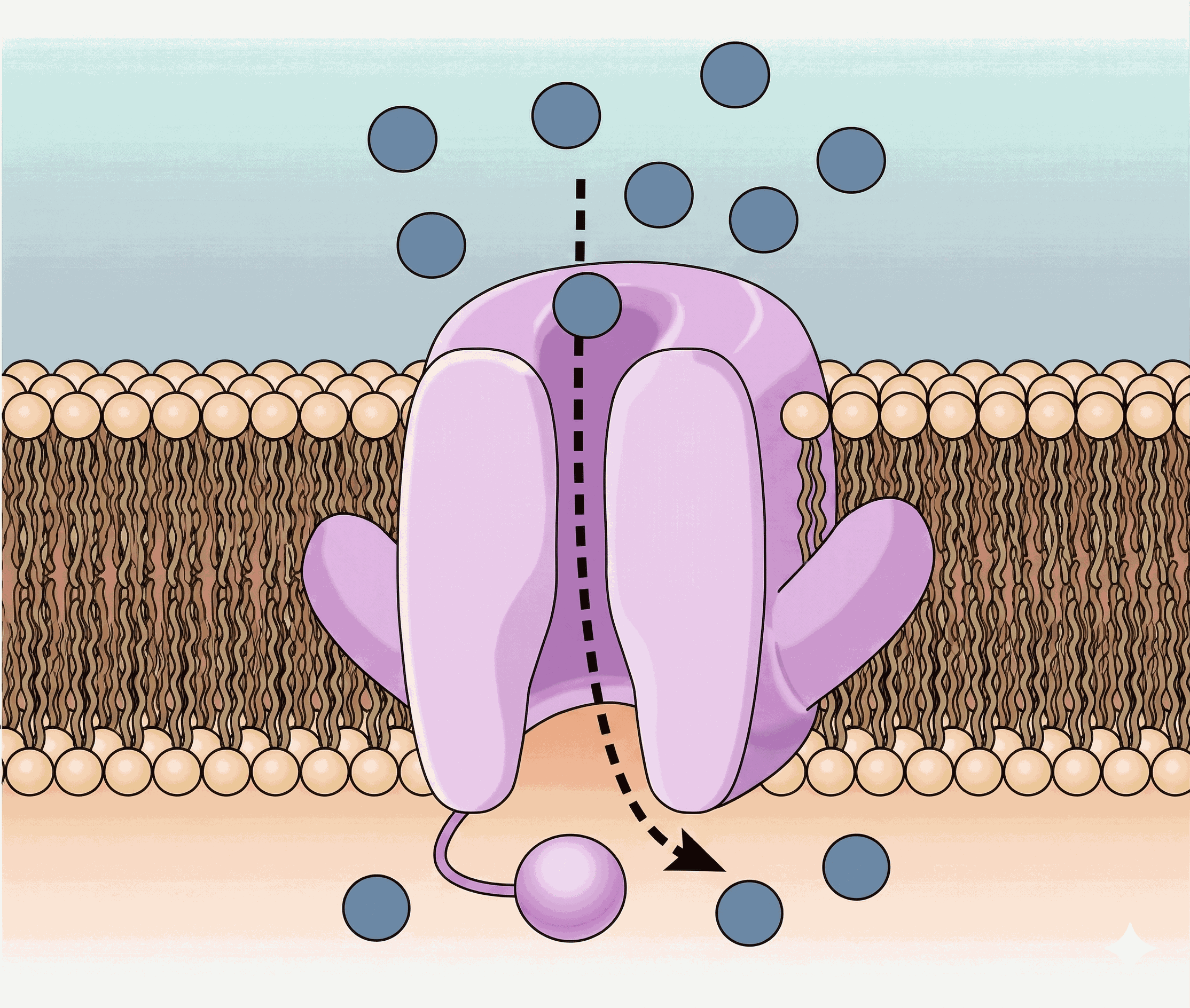
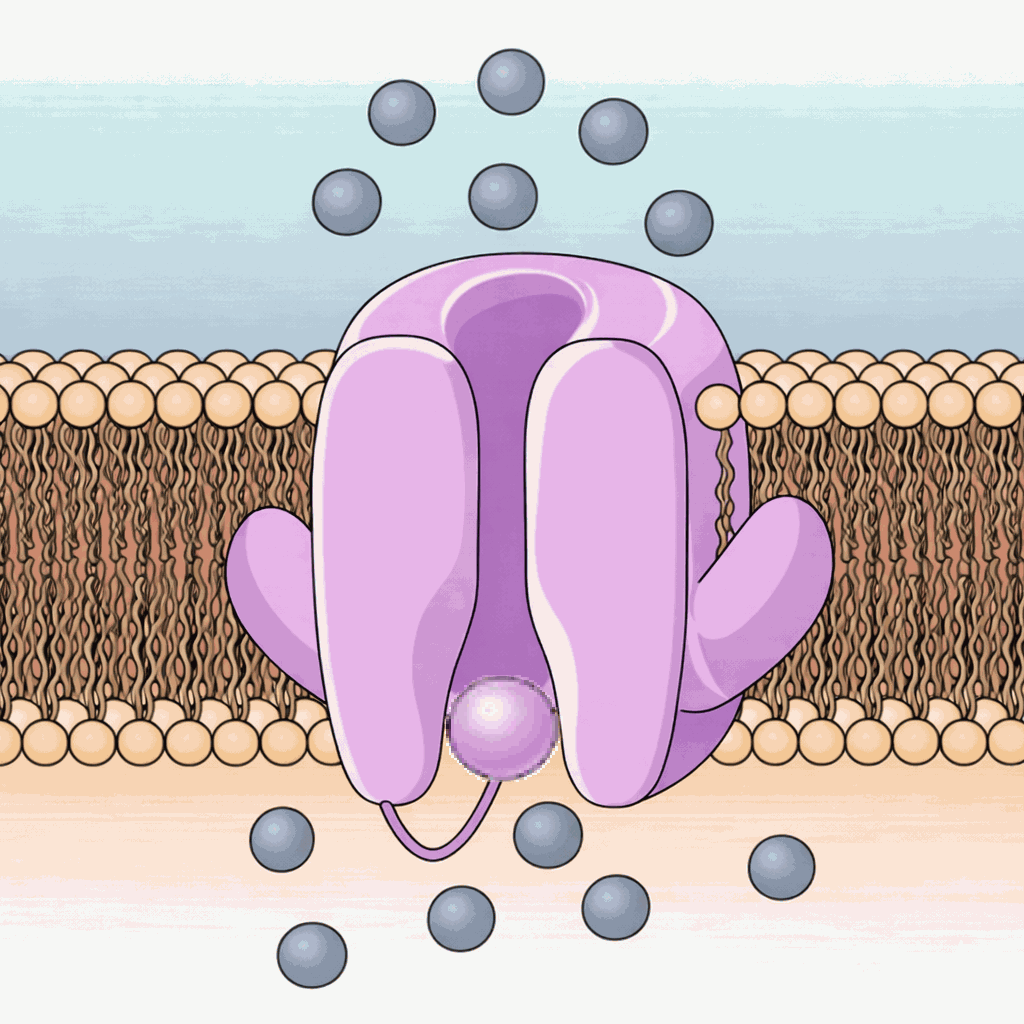
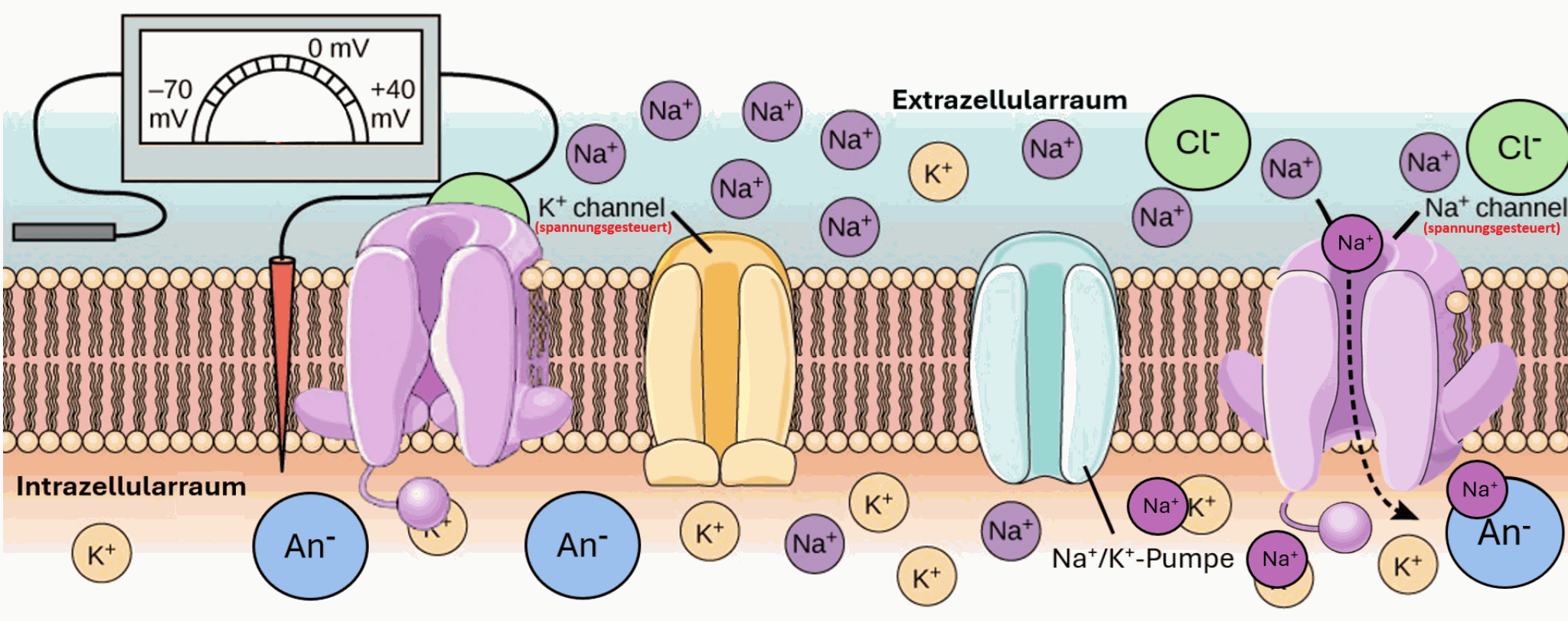
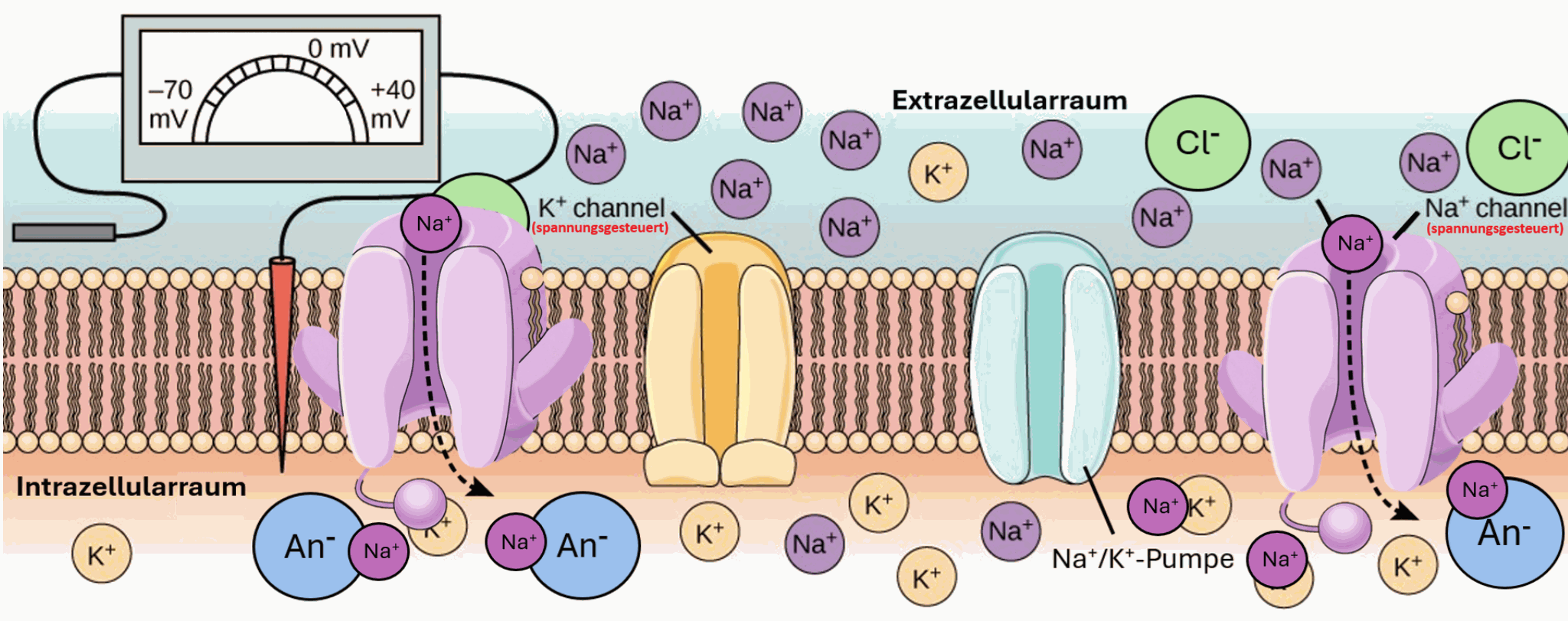
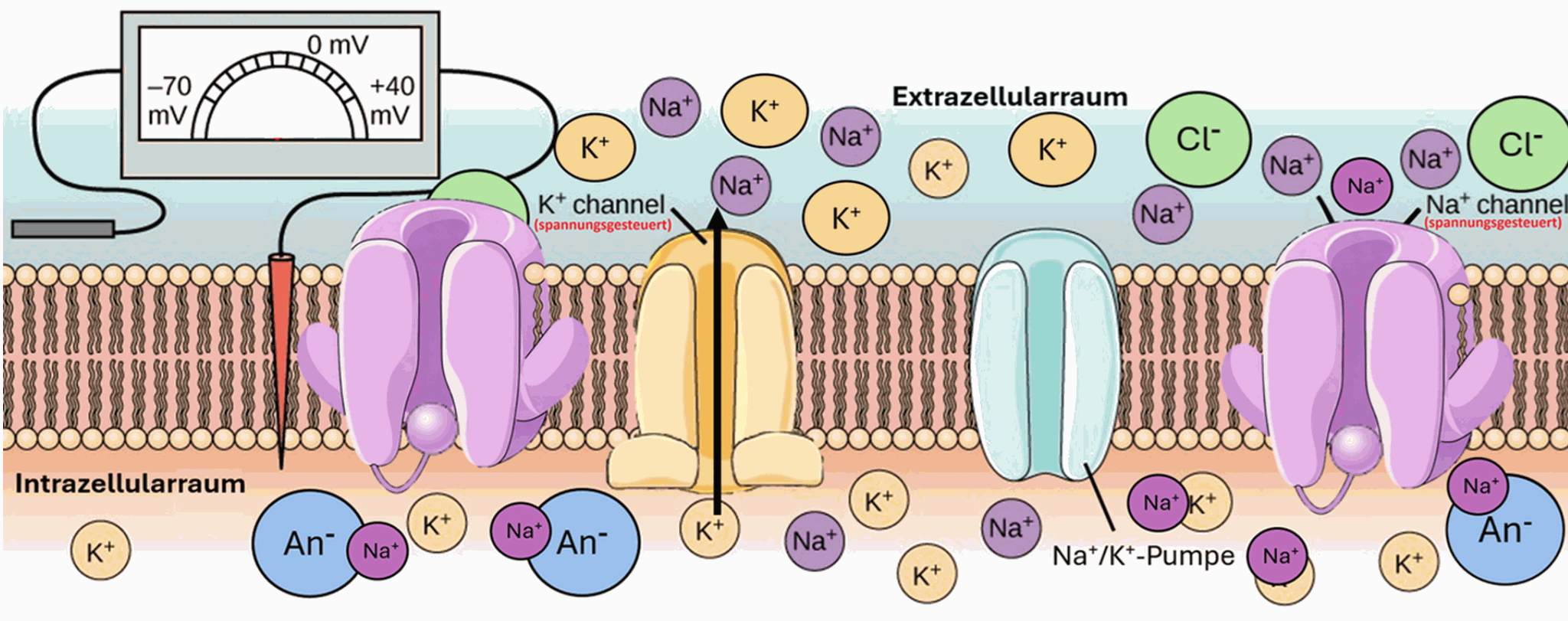
Explain how the resting potential arises using ion distribution, selective membrane permeability, and the sodium-potassium pump.
Signal transmission
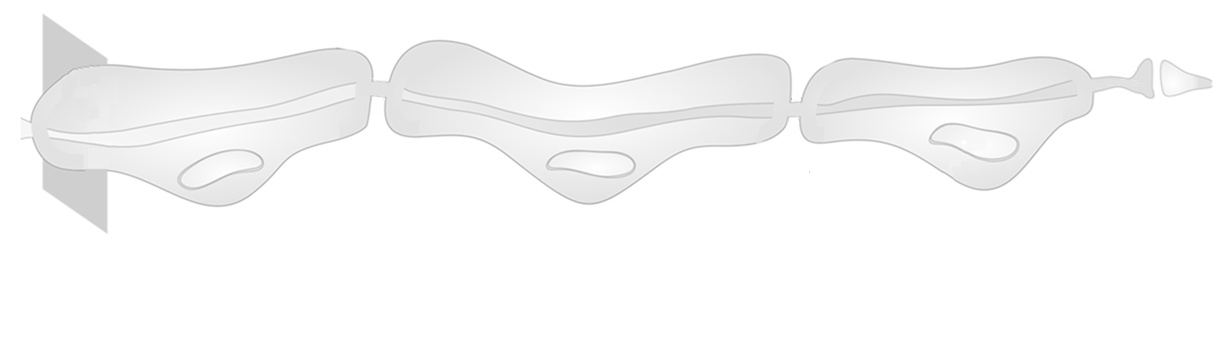
Trace how an electrical signal is transmitted along the axon and explain the roles of the myelin sheath and nodes of Ranvier.
Refractory period
Explain the absolute and relative refractory period and derive the consequences for one-way conduction and the maximum action-potential frequency.
Action potential
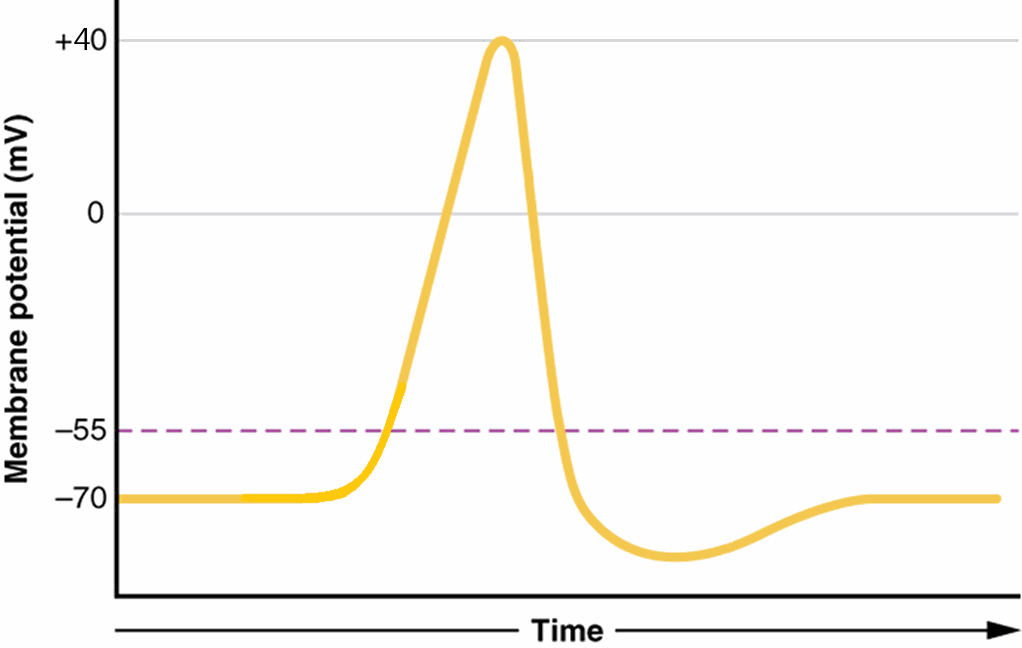
Arrange the phases of the action potential and explain the underlying channel states and membrane-potential changes.
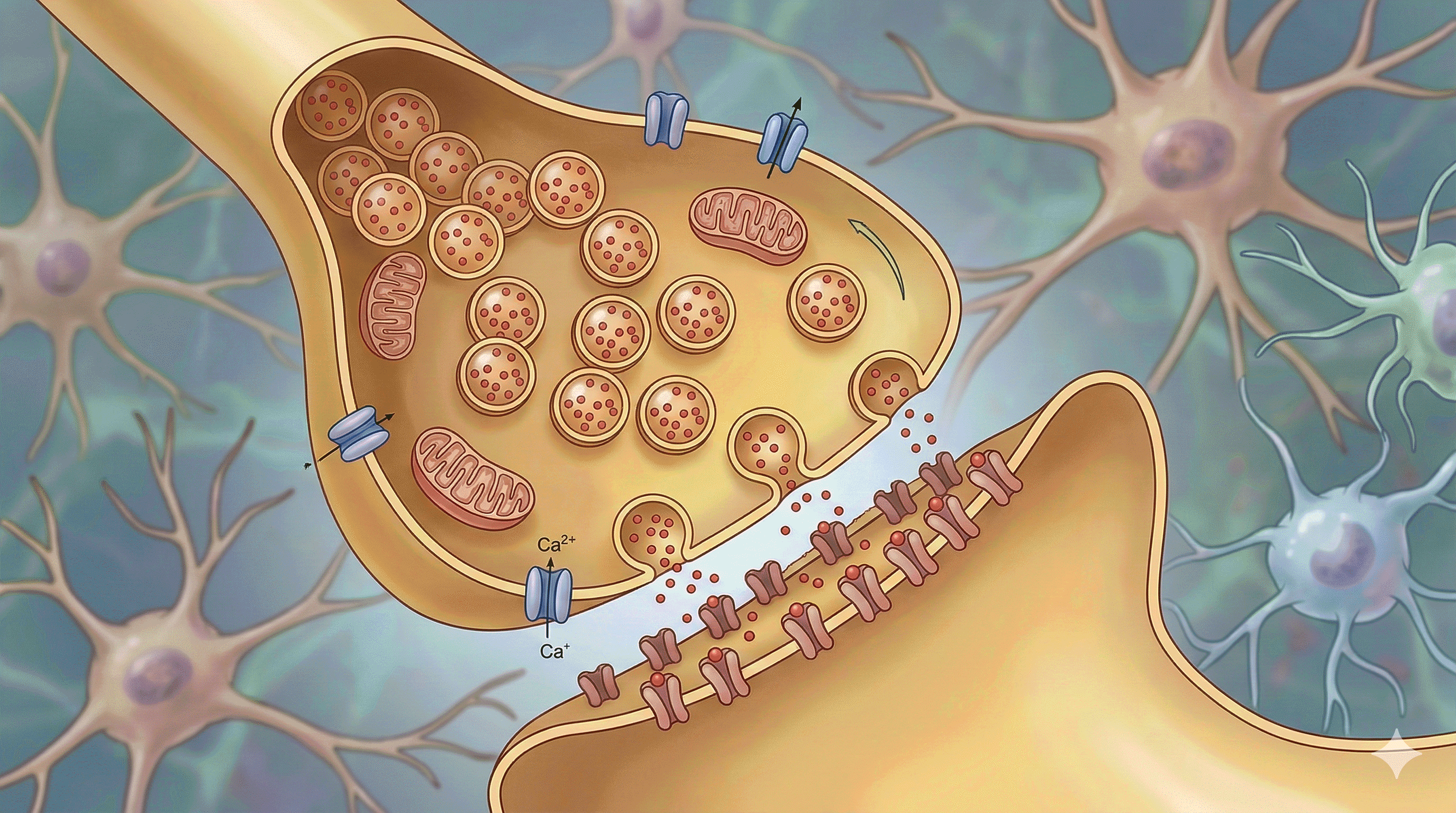
The synapse
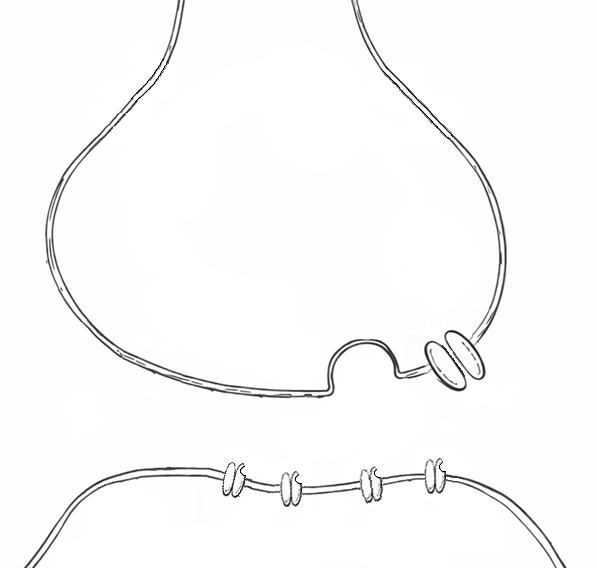
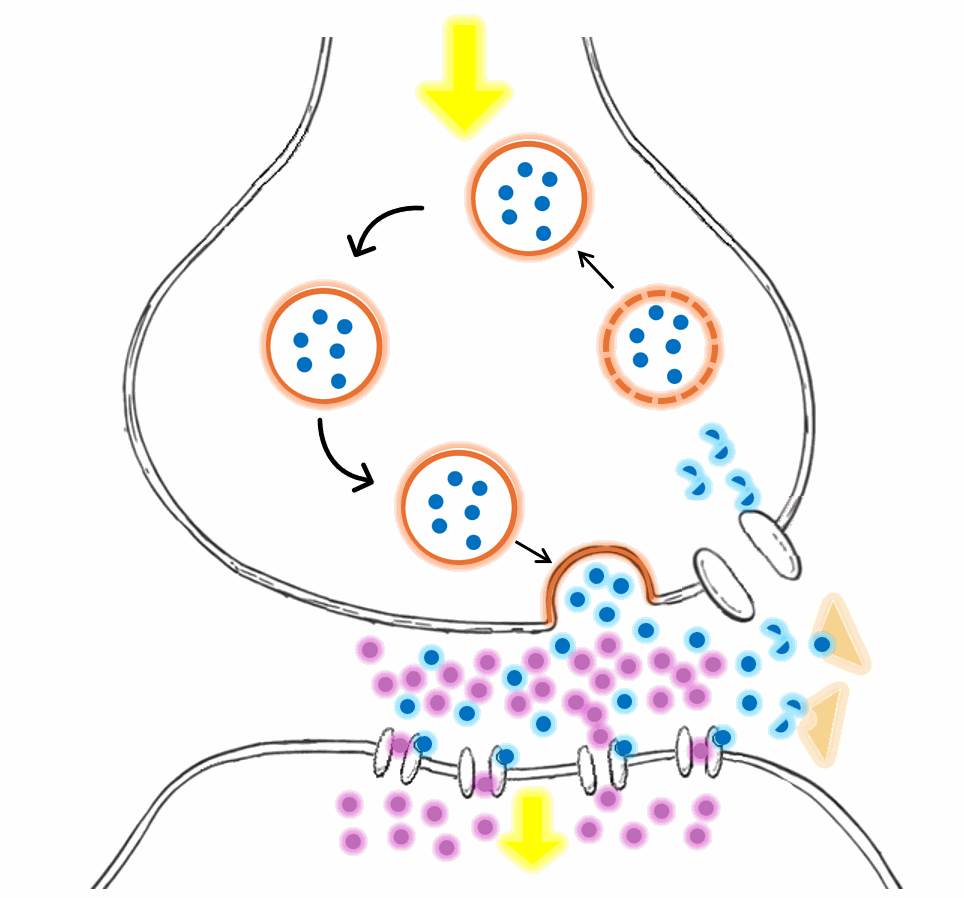
Investigate chemical signal transmission at the synapse, from neurotransmitter release to the response at the postsynaptic membrane.
The worksheet buttons are ready and link to PDF files in the Worksheets folder.
Neuron & Synapse - classroom simulation
Please choose a mode
The neuron
Choose grade level
🔒
Legend
Incoming excitation at dendrites
Integration at the axon hillock
Transmission along the axon
Signal release at the axon terminals
Tasks
Task 1: Label the neuron.
Task 2: Match each structure with the correct function.
Task 3: Describe the course of signal transmission along a neuron from reception to transfer to the next cell.
Task 1: Label the neuron
🔒
Task 2: Match structure and function
Structure
Function
The Resting Potential
Choose grade level
🔒
Comparison of ion distribution
Extracellular space
Intracellular space
145,0 [mmol/l]
12,0 [mmol/l]
4,0 [mmol/l]
150,0 [mmol/l]
120,0 [mmol/l]
10,0 [mmol/l]
0,0 [mmol/l]
155,0 [mmol/l]
Tasks
Task 1: Describe the charge distribution between the inside and outside of the cell and explain the importance of the selectively permeable membrane for forming the resting potential.
Task 2: Explain why the sodium-potassium pump is important for maintaining the resting potential over time.
Task 3: Formulate a hypothesis about how cyanide poisoning affects the resting potential.
Maintaining the resting potential
Legend
Potassium leak channel
Resting potential
Sodium-potassium pump
Sodium leak channel
Comparison of signal conduction
Legend
Signal transmission
Trigger at the axon hillock
Activation at the node
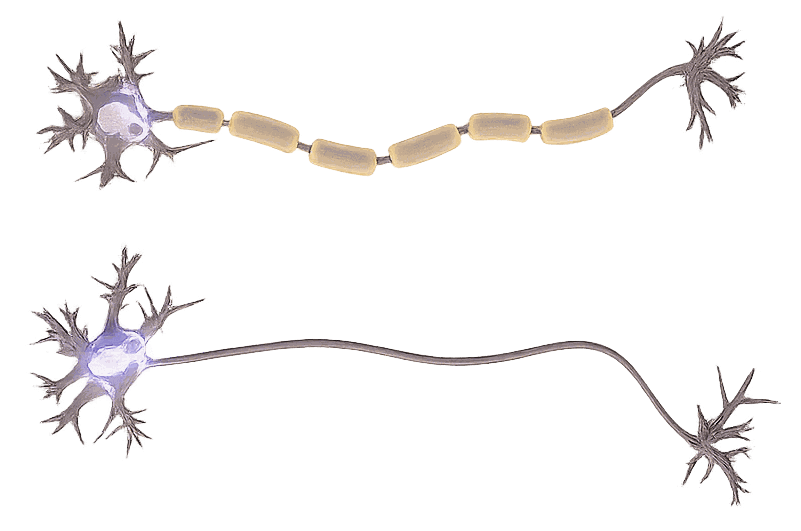
Task 1:
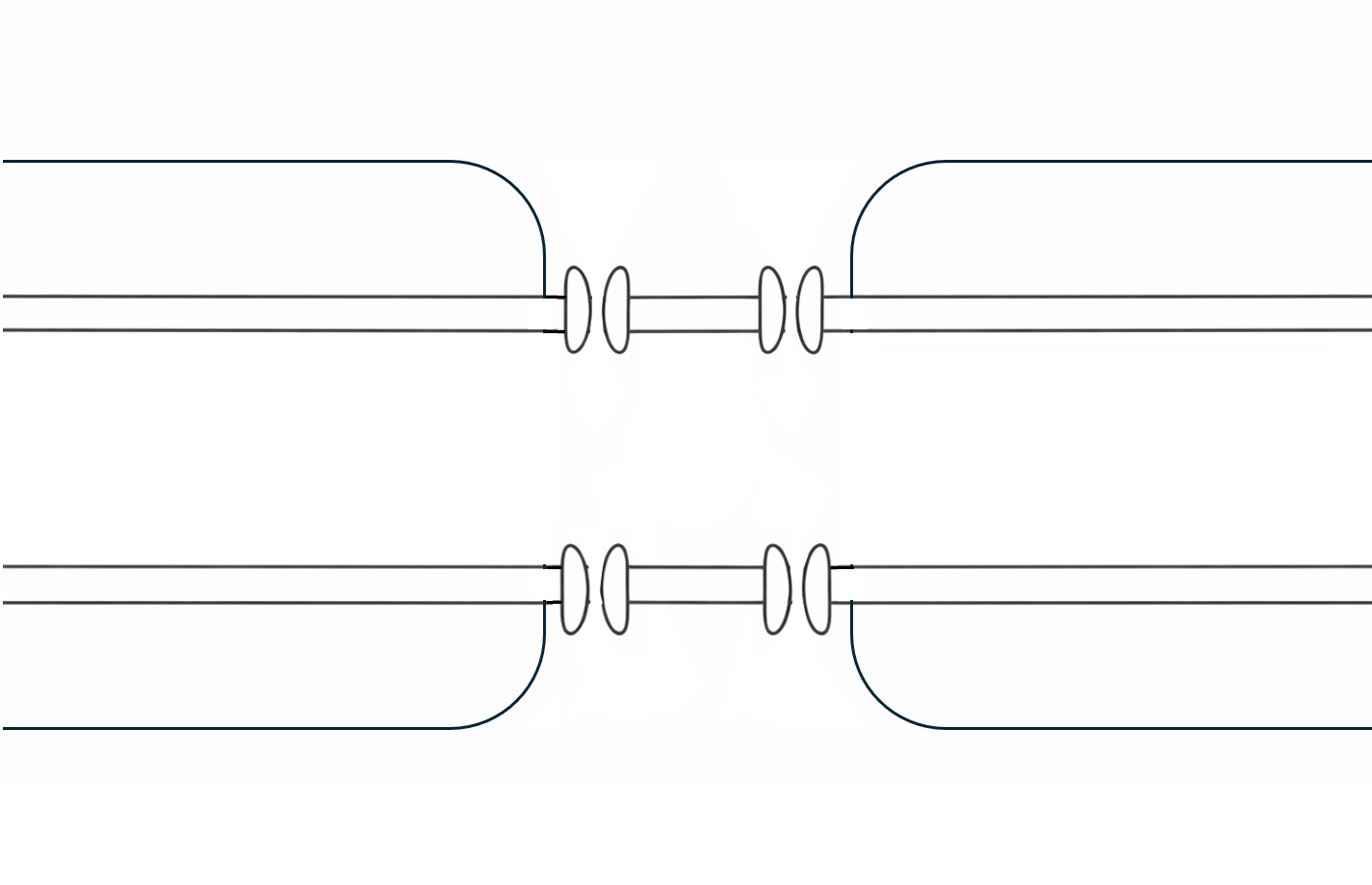
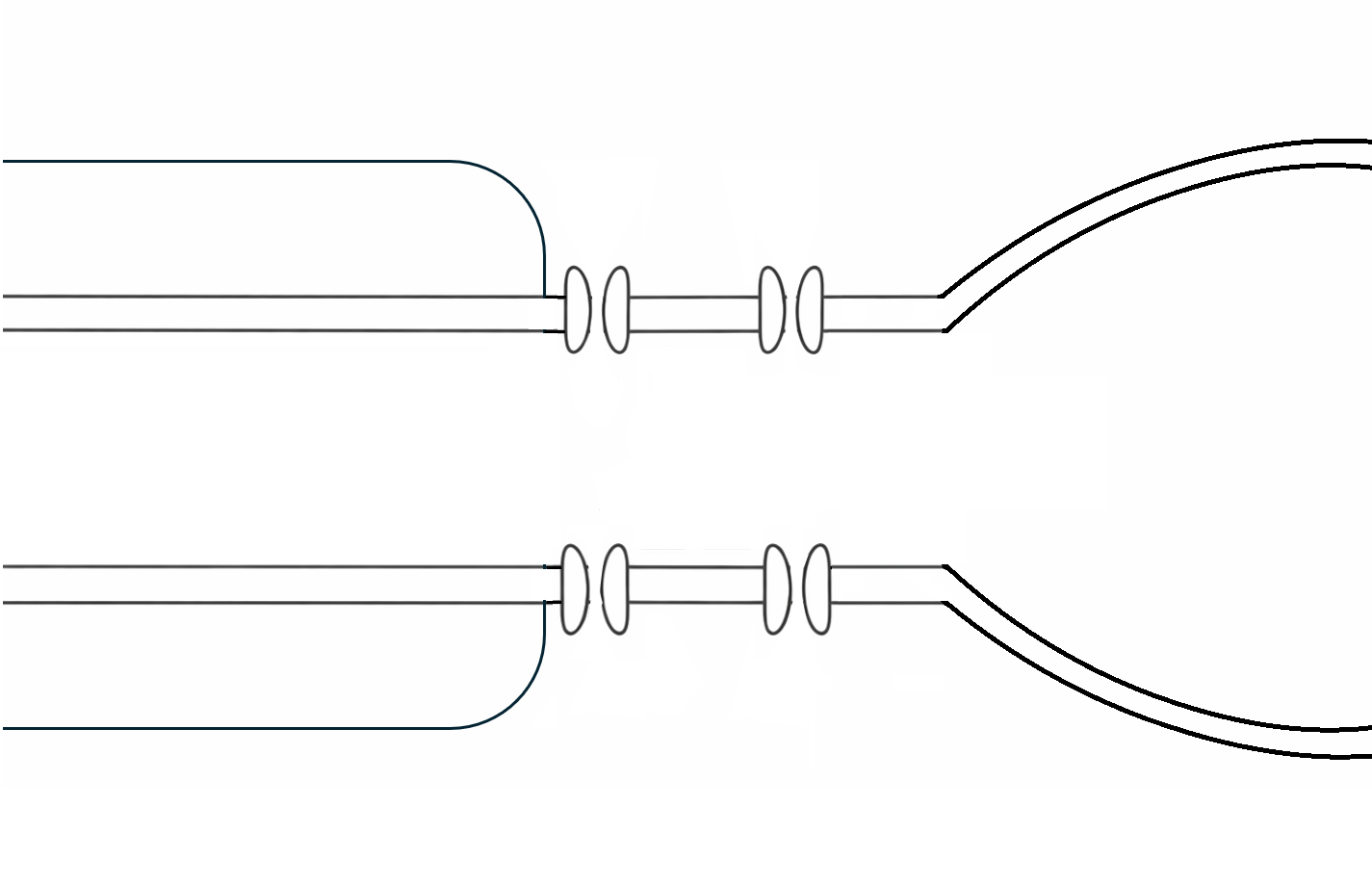
Compare conduction in the upper and lower axon. Describe how you can tell that the upper axon conducts saltatorily while the lower axon conducts continuously.
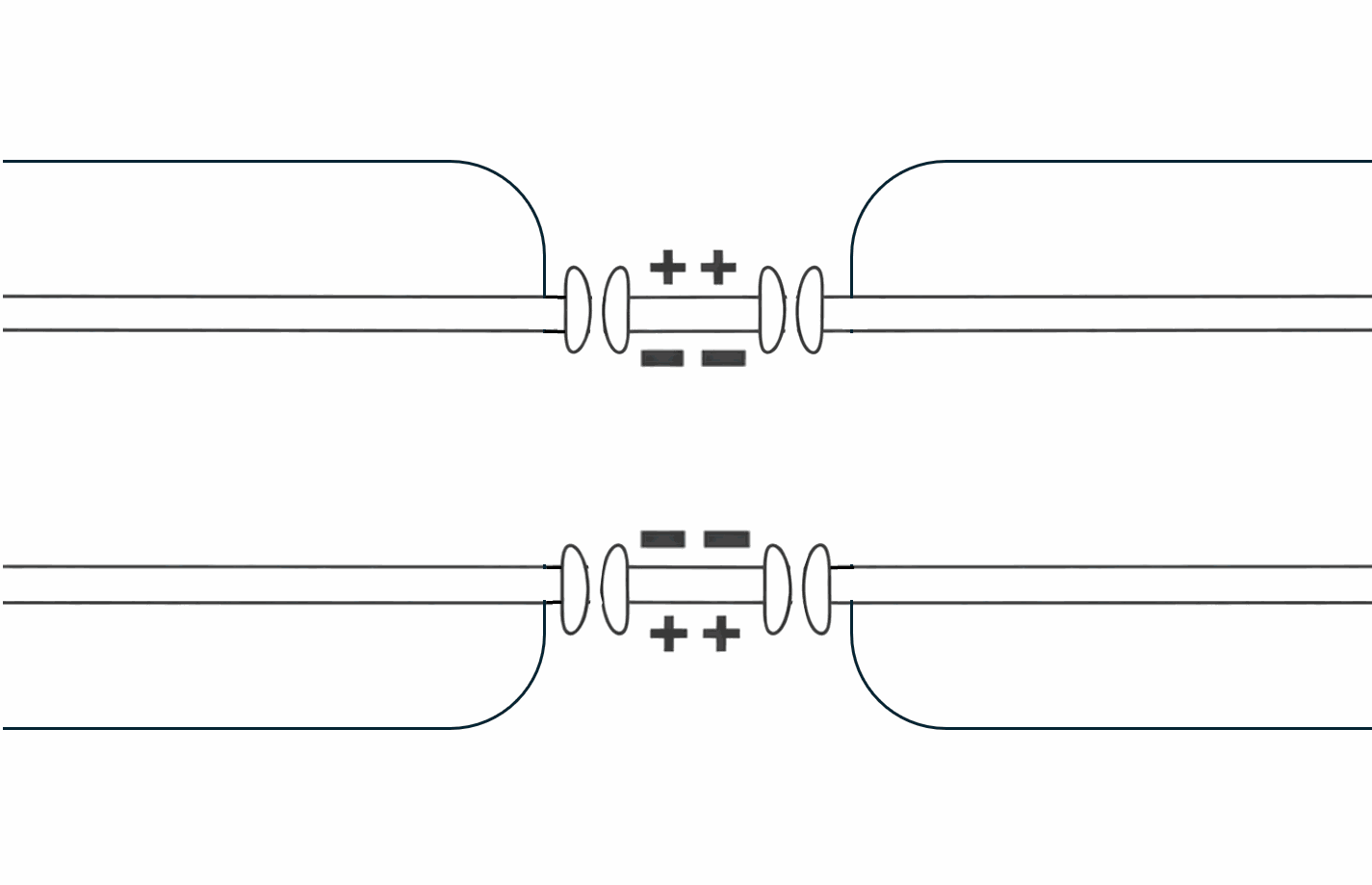
Signal transmission along the axon
Legend
Signal transmission
Positive charge
Negative charge
Chemical transfer
Task 2: Explain why the myelin sheath speeds up conduction.
The excitation appears to jump from node to node. This makes conduction faster than continuous transmission.
Model activity
Task 3: Build two models of signal conduction in neurons: one for continuous conduction and one for saltatory conduction. Use drinking straws and dominoes. Then film both models and explain how each type of conduction is represented in your model.
Support: The dominoes can represent the signal sections that are triggered one after another. Cut the drinking straws in half so they show the insulating myelin segments between the nodes. In this way, the dominoes and halved straws can make the difference between continuous and saltatory conduction visible.
Model 1: continuous conduction
Model 2: saltatory conduction
Molecular conduction
Voltage-gated ion channels, local currents, and propagation of the action potential along the membrane.
Task 2: Describe saltatory conduction at the molecular level.
Refractory period
Choose grade level
Legend
movable observation point
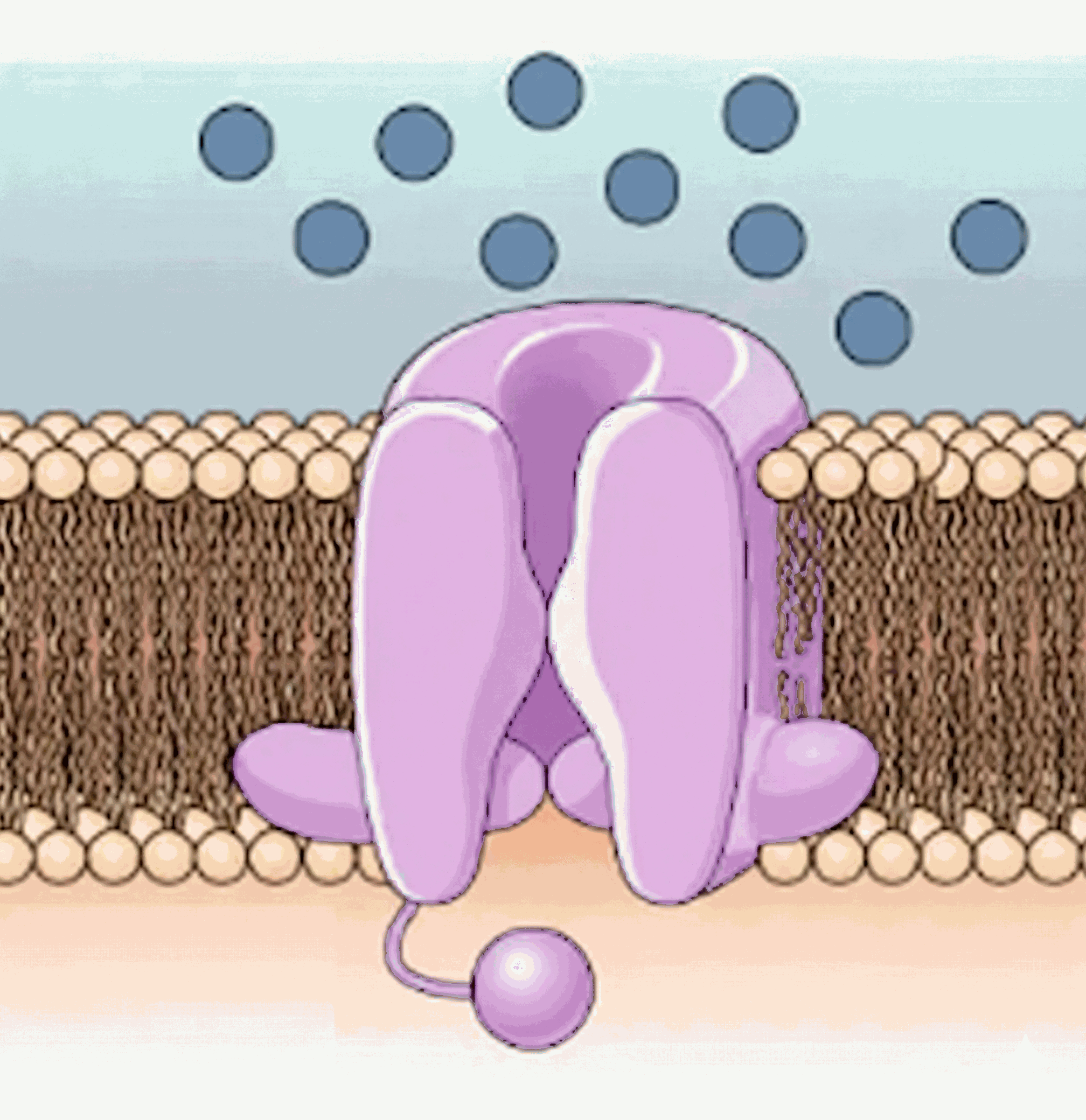
Task 1: Explain the difference between the absolute and relative refractory period using the states of the voltage-gated sodium channels.
Task 2: Formulate a hypothesis about the importance of the refractory period.
Phases of excitation along an axon
State of voltage-gated sodium channels
Choose grade level
Action potential
Action-potential curve
Current phase (blue marker)
Threshold (−55 mV, dashed)
The animation follows the phases of the action potential along the displayed curve.
Processes at the membrane
Cl− and An− animation
Sodium leak channels
Potassium leak channels
Na⁺/K⁺ pump: active restoration of ion gradients.
Complete the action potential sequence task to unlock this function.
Task 1: Course of the action potential
#
Phase
Description
The synapse
Choose grade level
🔒
🔒
1
2
3
4
5
Legend
Vesicles (neurotransmitter storage)
Neurotransmitter
positively charged particles
Enzym
Complete task 1 to unlock the legend.
Tasks
Task 1: Match the synapse terms to the correct structures in the diagram.
Task 2: Put the processes at the synapse into the correct order.
Task 1: Match the synapse terms to the correct structures in the diagram.
🔒
Processes at the neuromuscular synapse
🔒
The signal travels from the axon terminal across the synaptic cleft to the postsynaptic membrane.
Task 2: Put the processes at the synapse into the correct order.
#
Description
Influencing the synapse
Choose grade level
🔒
Legend
Ca²⁺ ions
Acetylcholin
Na⁺ ions
Acetylcholinesterase
Inhibiting substances
Enhancing substances
Tasks
Task 1: Compare the sites of action of the substances at the synapse.
Task 2: Describe how the active substances affect the postsynaptic response.
Task 3: Decide whether the active substance causes flaccid or rigid paralysis and justify your choice.
How substances act at the synapse
Effects of selected substances at the synapse
🔒
The stimulus-response chain
Choose grade level
Tasks:Task 1: Create two examples of a stimulus-response chain.Task 2: Describe one of your stimulus-response chains using technical terms.
Chooseexample
🔒
Stimulus
drop the matching stimulus image here
→
Sense organ
drop the matching sense organ here
afferentnerve
Brain (CNS)
CNSProcessing information
efferentnerve
Effector
drop the matching effector here
→
Response
drop the matching response here
Task 1: Create two examples of a stimulus-response chain one after the other.
Stimulus-response chain – Information
A stimulus-response chain describes how an organism responds to a stimulus from the environment or from its own body. It always begins with a stimulus, meaning a change that can be detected by a sense organ. An adequate stimulus is the type of stimulus for which a sense organ is especially specialized: the eye responds mainly to light, the ear to sound, and the nose to odor molecules. The sense organ detects the stimulus and converts it into information that can be transmitted through the nervous system.
This information travels through afferent nerves to the brain or central nervous system. "Afferent" means that information is carried from a sense organ toward the center. In the brain, incoming information is consciously processed, compared with existing knowledge, and interpreted. Only then is a suitable response selected. In this mode, the brain or CNS is therefore the place of conscious processing and control.
The brain then sends a command through efferent nerves to an effector. "Efferent" means that the information travels away from the centre to an executing organ. An effector is the organ that actually carries out the response, for example a muscle. The observable response is the result of this control.
Stimulus
→
Sense organ
→ afferent nerve →
Brain / CNS
→ efferent nerve →
Effector
→
Response
Task 1: Create two examples of a stimulus-response chain.
Task 2: Describe one of your stimulus-response chains using technical terms.
Welcome to the "Neuron and Synapse" simulation
Choose grade level
When opening the simulation for the first time, choose either Grade 8 or Grade 13. This choice is applied to all options and only resets after the page is reloaded.
Information
Poisoning: potassium cyanide
Potassium cyanide acts by inhibiting an enzyme of the respiratory chain in the mitochondria. As a result, oxygen can no longer be used effectively for aerobic energy production, even though it is available. ATP production therefore collapses rapidly. Tissues with high energy demand, such as nervous tissue, are especially sensitive. For the neuron this means: without sufficient ATP, the sodium-potassium pump can no longer work continuously. Normally, it transports sodium ions outward and potassium ions inward, stabilizing the ion gradients that make the resting potential possible.
The synapse - choose topic
Choose which aspect of the synapse you want to investigate.
Image sources
Neuron OpenStax: The Neuron. Wikimedia Commons, CC BY 4.0, edited.
Synapse Thomas Splettstoesser: Synapse schematic (unlabeled). Wikimedia Commons, CC BY-SA 4.0, edited.
Resting potential Robert Bear and David Rintoul: Ion channel activity before during and after polarization. Wikimedia Commons, CC BY 4.0, edited.
Action potential OpenStax: Action Potential. Wikimedia Commons, CC BY 4.0, edited.
Refractory period Clark, Douglas and Choi: Biology 2e, 35.2 How Neurons Communicate. OpenStax, CC BY 4.0, edited.
Signal transmission Helixitta: Propagation of action potential along myelinated nerve fiber en. Wikimedia Commons, CC BY-SA 4.0, edited.
Comparison of conduction Dr. Jana: Saltatory Conduction. Wikimedia Commons, CC BY 4.0, edited.